The AI Conference 2026: agents ship, the power bill, the neutrality test.
The 2026 edition is the year the builder room stops arguing about models and starts arguing about the bill. Agents are shipping on stage while the host's own newsletter counts 12 gigawatts of data-center buildout and asks who actually pays for it.
The setup: Pier 48, end of September, the builder room
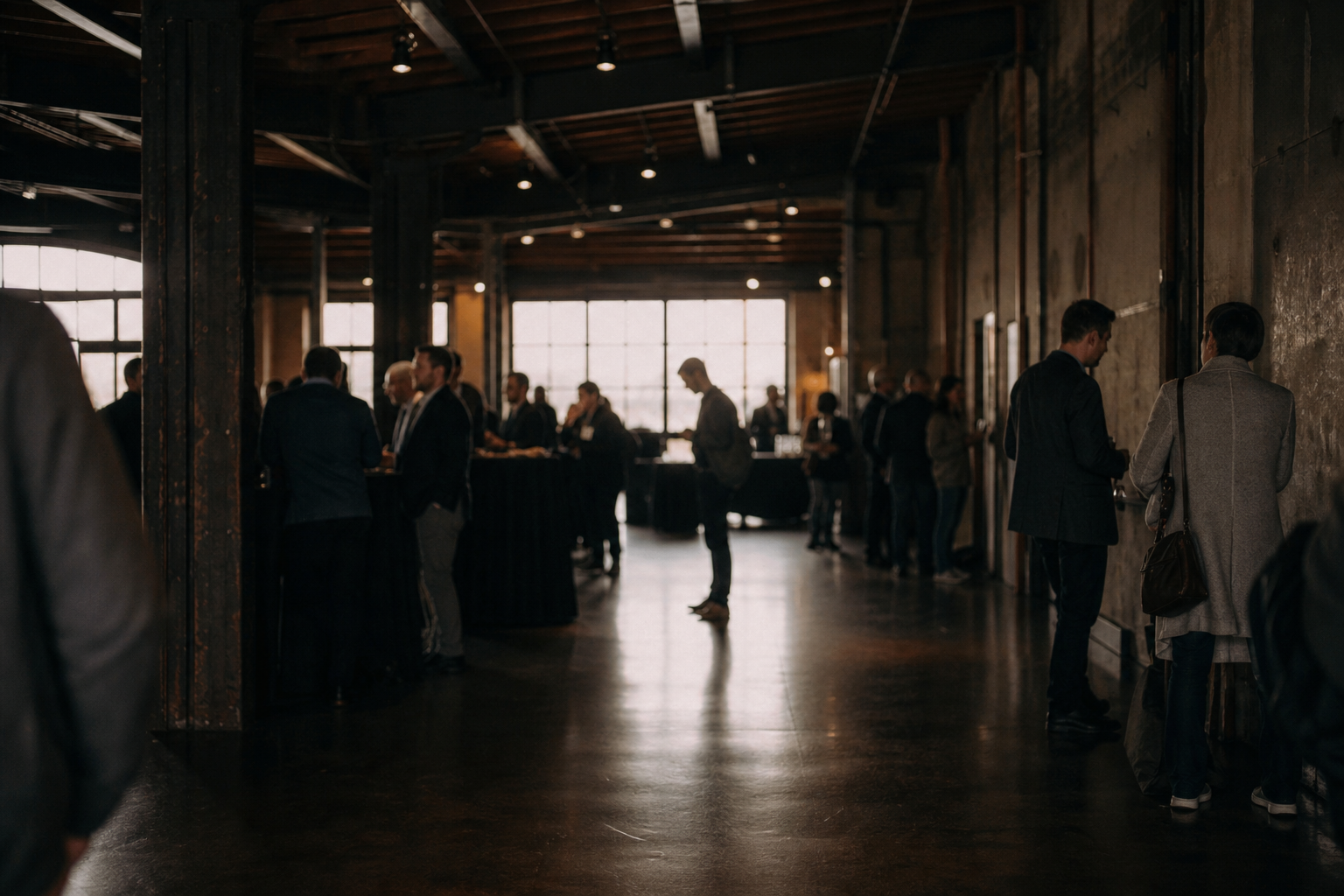
Pier 48, September 29 through October 1, is where the builder crowd sorts itself out for the last quarter of 2026. Ben Lorica's vendor-neutral room is the one that still books researchers next to founders instead of picking a side, and this year it does that while the host's own newsletter argues the real story is 12 gigawatts of announced data-center capacity, not the next model.
The year's headline: agents shipped, now the bill
The tell this year is a mismatch. On stage you will get agents in production. The crowd that showed up in 2025 to watch model demos is back to talk orchestration, evals, and what survives contact with a paying customer. G2's 2026 agent-builder report, 770 verified reviews across seven vendors, put orchestration and integration as the make-or-break, not raw model quality. Meanwhile the man whose name is on this conference, Ben Lorica, spent his last Gradient Flow issue on the data-center rebellion: 12 GW announced, 5 GW actually under construction, and the question of who pays for it. Two days before this bundle was pulled, the White House logged TSMC's US commitment at 265 billion dollars. So the year's real debate is not whether agents work. It is whether the compute economics underneath them close, and whether a room full of seed-stage founders has priced that into their burn. Screenshot that gap. It is the conference.
Speakers worth showing up for
The 2026 list is still rolling. The official site is dripping speakers weekly off a 120-plus roster and had named only the first confirmed batch when this brief was built, so treat any single name below as provisional and watch the weekly drops. What last year's lineup and the current speaker archive tell you is where the plenary weight sits.
Ben Lorica, conference co-creator and Gradient Flow author. The signal is unambiguous. His recent writing is all data-center buildout, 12 GW announced against 5 GW under construction. Ask him the uncomfortable version: at current inference prices, which category of agent startup in this room is underwater the day the free-tier compute credits expire?
Harrison Chase, LangChain (on the official speaker archive). LangChain spent the last year moving from framework to orchestration layer with LangGraph, which is exactly the wedge G2's 770-review report flagged as make-or-break. The question worth your slot: what percentage of production agent deployments actually need multi-step orchestration versus a single well-scoped call, and where teams are over-building.
Sarah Wooders, Letta (on the official speaker archive). Her work is agent memory and stateful agents, the layer everyone demos and nobody prices. Ask her what persistent memory costs per active user per month at scale, because that number decides whether half the agent demos on the floor have a business.
Lin Qiao, Fireworks AI, 2025 keynoter. Inference infrastructure, and last year she was already making the cost-per-token argument. If she returns, the question is which workloads she watches move off frontier models to smaller fine-tuned ones, and how fast. That migration is the compute-bill story in miniature.
Breakouts with actual signal density
The evals and reliability track, small rooms. This is where the engineering is. The keynote stage sells the vision. The 40-person eval sessions are where someone admits their agent passed the demo and fell over on a chunk of real tickets. Sit in these even when a bigger name is on the main stage.
Anything on inference economics or model routing. Given the compute story, the sessions on cost-per-token, model routing, and moving workloads off frontier models are the ones that connect the plenary anxiety to your own runway. Fireworks-, Anyscale-, and Databricks-adjacent speakers tend to run these, and Ion Stoica's academic and commercial lineage sits right on this seam.
Developer-productivity research, not vendor pitches. Yegor Denisov-Blanch's Stanford work on how coding assistants change developer output ran in 2025 and cut against the marketing numbers. If the research track carries a 2026 update, it is the rare session with a control group. Bring your own team's productivity assumptions and see if they survive.
The prototype-to-production developer track. The official agenda references a prototype-to-production developer track, and community posts put builders from Replit and Windsurf in the mix. That is the track where you find out which parts of the agent stack are load-bearing in real deployments and which are still demoware.
Companies to track at the booths
Sponsor confirmations are early. Two are public as of this brief: GMI Cloud and LaunchDarkly. The rest of the read is by category, from who sponsors rooms like this.
GMI Cloud. What they say: high-performance GPU cloud infrastructure to train, fine-tune, and deploy faster. What they are actually selling: allocation. When a seed-stage team cannot get B200 capacity from a hyperscaler, the neocloud that can hand you GPUs this quarter wins the logo, and the pitch is really about escaping the scarcity and the lock-in of the big three. The booth conversation is about capacity and price per GPU-hour, and features are an afterthought.
LaunchDarkly. What they say: feature management and progressive delivery, now showing up at an AI conference. What they are actually selling: a control plane for nondeterministic systems. Feature flags become the kill switch and the gradual-rollout mechanism for agents that behave differently every run. If they lead with model gating and guardrails rather than classic web flags, that is the tell that they have repositioned for this room.
The neocloud pack broadly. Expect several GPU-cloud and inference-serving vendors beyond GMI. They compete less with each other than with your AWS bill and the plain question of whether you can get capacity at all. Ask each one the same thing: minimum commitment, and what happens to your price when the credits run out.
The observability and eval vendors. Whoever is selling agent tracing, evals, and monitoring is selling the thing the G2 report says teams underinvest in until production breaks. They will frame it as trust. Read it as the market learning that shipping the agent is the easy 20 percent.
What gets argued in the hallway (and what doesn't)
Three things that get argued in the hallway at Pier 48:
Whether "agents in production" means revenue or still means pilots. The stage says shipped. The bar afterward is where someone admits their flagship customer is a design partner paying nothing, and the retention-past-90-days number is the one people trade quietly.
Whether the data-center buildout is a floor or a bubble. Lorica's 12 GW announced against 5 GW under construction is the exact shape of an argument: bulls say demand catches up, bears say half those gigawatts are press releases. TSMC putting 265 billion dollars into US fabs is a real vote, and the room will split on what it signals.
Whether "vendor-neutral" can survive the economics. The conference brands itself neutral, and it earns that on stage. Off stage, nearly every startup's unit economics route through OpenAI, Anthropic, or Google pricing, so neutrality is a stage posture more than a business reality, and everyone knows it.
What nobody at Pier 48 will say out loud: the center of gravity in AI governance may be moving to Shanghai, not Washington. While this room debates US lab pricing, Beijing's WAICO coalition pulled in 29 nations around open-source and equitable governance, and the UK stood up a 500-million-pound sovereign unit. The unexamined assumption in the building is that the US sets the defaults and the rest of the world adopts them. For a founder selling into Europe, the Gulf, or Southeast Asia in 2027, that assumption is already wrong, and almost no one on this agenda is briefed to talk about it.
The follow-up window
Pier 48 is a forty-people-a-day room, and it moves faster than most. You will meet a founder at the espresso cart, watch a demo that lands, add them on LinkedIn from the hallway, and by the time you are back at your desk you will remember the demo and not the person. That is the failure mode Met is built for: capture the context in the moment, who they were, what they were building, why it mattered to you, before the warm window closes. Three days after the last session, the stack of names is cold. Met keeps it warm. It is iPhone-only and free to start. Grab it before you fly out.
Download for iPhone
Read by operators heading to The AI Conference who want the intel before they fly.