SOF Week's real story shows up five weeks after the floor goes dark.
Five weeks after Tampa, the keynote forecasts meet the markup. Here is the honest scorecard on our SOF Week briefing, and what the floor actually revealed.
The floor is bare now
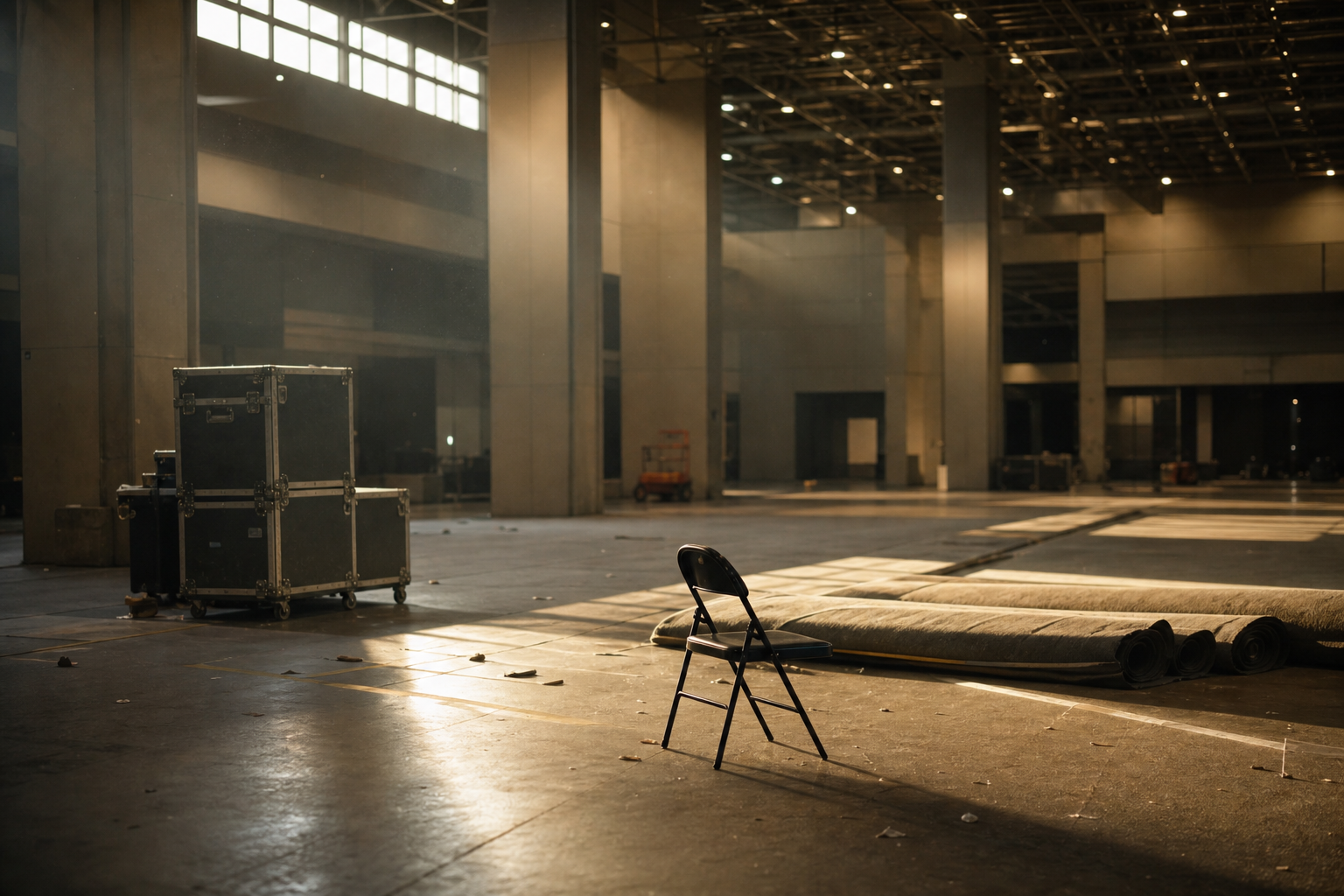
The Tampa Convention Center floor has been bare for five weeks. The autonomy demos are crated, the Global SOF Foundation lanyards are in a drawer, and the posts about good conversations at SOF Week have scrolled out of everyone's feed. What is left is the part that tells you whether the week mattered. Not the keynote applause. The markup language, the second meetings that got booked or quietly didn't, the contract notes that moved or stalled. We published a briefing before the doors opened in May. This is the scorecard we owe it.
The Five-Week Tell
Every conference has a Five-Week Tell. Booth traffic, panel applause, the count of business cards in a hotel-room pile: none of it tells you what the event was worth. The tell arrives about five weeks out, when the people who made promises on the floor have either acted on them or let them lapse without a word. A keynote is a forecast. The markup is the weather. SOF Week 2026 produced a strong forecast. Five weeks of weather is now in, and it does not match the forecast cleanly.
Why day-of scoring misses it
The defense-trade press grades SOF Week the day it ends. The headline is whichever number a flag officer said out loud and whichever vendor unveiled the shiniest airframe. That coverage is real, and it is also grading the trailer instead of the movie. A general can announce an intent on the main stage and have it die in a markup six weeks later. A small vendor can get zero press at SOF Week and walk out with the meeting that becomes a program of record by fall. Day-of scoring rewards volume and stagecraft. It cannot see follow-through, because follow-through has not happened yet.
The scorecard, framing by framing
Our briefing led on three framings. Here is each against five weeks of evidence.
First, the commander’s address. We framed it as the new commander’s first SOF Week and asked whether he would extend his predecessor’s framing or move toward more direct language about the fight. The name was right: Adm. Frank Bradley, who took command of USSOCOM after Gen. Bryan Fenton retired in October 2025, led his first SOF Week as commander. On the substance of the keynote we will hold ourselves to the evidence rather than the prediction. Public coverage of the address does not give us a clean enough transcript to declare a decisive pivot one way or the other, so we score this framing unresolved rather than claim a read we cannot source.
Second, the $24 billion figure. We had it right that the number was on the table, and we can now say exactly what it was. The Global SOF Foundation’s 2026 SOF Imperatives report calls for growing USSOCOM’s top line to roughly $24 billion by 2031, about five percent annual growth, returning special operations to near two percent of the defense budget, after a topline that has been effectively flat since FY2019 while demand climbed. The real test we set was whether that number would move from an advocacy stage into the FY27 markup conversation. As of late June we cannot point to the $24 billion target appearing as specific markup language, so we score this one as live but not yet validated: an advocacy position, not a budget line.
Third, the prime-tier question. We asked whether one of the software-and-autonomy firms would finally be treated as a prime contractor rather than a subcontractor. Five weeks is a short window for a contracting posture to change, and we have no confirmable award that resolves it, so we mark this framing open. It is the one most worth watching, because the day it resolves is the day the autonomy aisle stops being a demo and starts being a program.
The autonomy aisle as a case study
Walk the autonomy aisle as a case study. At SOF Week, the counter-drone and one-way-attack demos drew the densest crowds on the floor, the kind where you wait three deep to talk to an engineer. Every booth running a live autonomy stack or a defeat demonstration had the same problem: not enough engineers to handle the inbound. The crowd is the forecast. The five-week question is what those vendors have disclosed, signed, or shipped since the carpet came up. A packed booth and a quiet eight weeks is its own data point.
What changes if the tell is right
If the Five-Week Tell holds, it changes how an operator should work a conference. The floor is not where deals close. It is where you capture enough signal to run the five-week test yourself, on the handful of conversations that could actually become revenue or a program. So the goal on the floor stops being the biggest card count. The goal becomes a clean record: against each real conversation, what was said, what was promised, what the next step was, in enough detail to check it later. Most people leave Tampa with the opposite: a pile of cards and a blur of context that evaporates by the time they land.
Why we could grade ourselves
This recap exists because we kept that kind of record. We can grade our own briefing five weeks later because the specifics were captured when they were said, not reconstructed from memory. That is the discipline that makes a conference pay off, and it is the discipline almost nobody runs after a 12-hour day on a convention floor. By Friday, the names blur into the cards, and the cards become anonymous strangers by the time the follow-ups are due. Met exists for that exact gap: capture the context in the room, in Event Mode, while you keep talking, so the person you met in May is still a real, specific contact in July, when the follow-through is what counts.
What we are tracking next
Three threads we are watching into the fall. The FY27 markup, where the budget framing from the week either becomes line items or evaporates. The House Appropriations Committee released the FY27 Defense Appropriations Bill on June 10, 2026, as part of ongoing FY2027 markup activity. ([source](http://appropriations.house.gov/news/press-releases/committee-releases-fy27-defense-appropriations-bill)). The autonomy awards, where booth heat converts to contracts or doesn't. And next year's framing: whether the commander's language at SOF Week 2027 confirms the direction this year only hinted at. We will run the same scorecard then.
Walk out of your next conference with context, not just cards. Get Met.
Met is built for the conference operator who measures a week by what closes in the months after it, not by the size of the card pile. Event Mode captures the context in the room so the follow-up still lands when it matters, with iCloud-only storage that keeps your contacts yours.