The detail you lost at the conference stayed behind in the room.
Godden and Baddeley's diver study explains why the detail that made a conference conversation worth following up on won't come back at your desk.
The card is in your hand and the reason is gone
Thursday morning after the show, the third card in your stack belongs to someone you genuinely liked. You remember the booth. You remember they laughed at your line about procurement timelines. You remember thinking, mid-conversation, that this one deserved a real follow-up.
What you can't get back is why.
There was a specific thing. A problem they mentioned, a name they dropped, a project starting next quarter that lined up with what you sell. It felt impossible to forget while you were standing there. Now you're staring at a name and a title, typing "Great meeting you at the show!" and hating every word of it.
Most people call this a bad memory and promise themselves better notes next time. That diagnosis is wrong. And the fix it points to makes things worse.
The encoding gap: the detail was filed under a room
Memory doesn't store a fact on its own. It stores the fact along with the circumstances it arrived in: the noise of the aisle, the light, the other person's voice, the coffee going cold in your hand, your own adrenaline at the end of a good exchange. Those circumstances become part of the address. Later, they're how you find the fact again.
Call it the encoding gap. The detail that made the conversation matter was encoded on the exhibit floor, inside a physical and mental environment that stopped existing the moment you walked out of the hall. When you sit down at a quiet desk days later and try to pull it back, you're searching with the wrong key.
So the loss isn't mainly a decay problem. It's a retrieval mismatch.
Why "take better notes later" doesn't fix it
The standard advice treats contact memory like a tank with a slow leak. Review your cards sooner. Write fuller notes in the hotel that night. Block an hour on Monday to process the pile.
Each of those moves the reconstruction somewhere calmer, which feels responsible. But each one widens the mismatch. The hotel room at 11 p.m. shares almost nothing with the booth at 2 p.m.: different light, different sound, different body state, nobody in front of you. Monday's desk shares even less.
Effort doesn't close the gap either. Staring harder at a business card means searching the same drawer more carefully. You'll recover what the card itself carries (the name, the company, maybe the face) and very little of what lived only in the moment.
We've written before about the slow fade in [The 72-Hour Memory Cliff](/articles/72-hour-memory-cliff/). That piece is about how long you wait. This one is about where you are when you try.
What did the Godden and Baddeley diver study actually show?
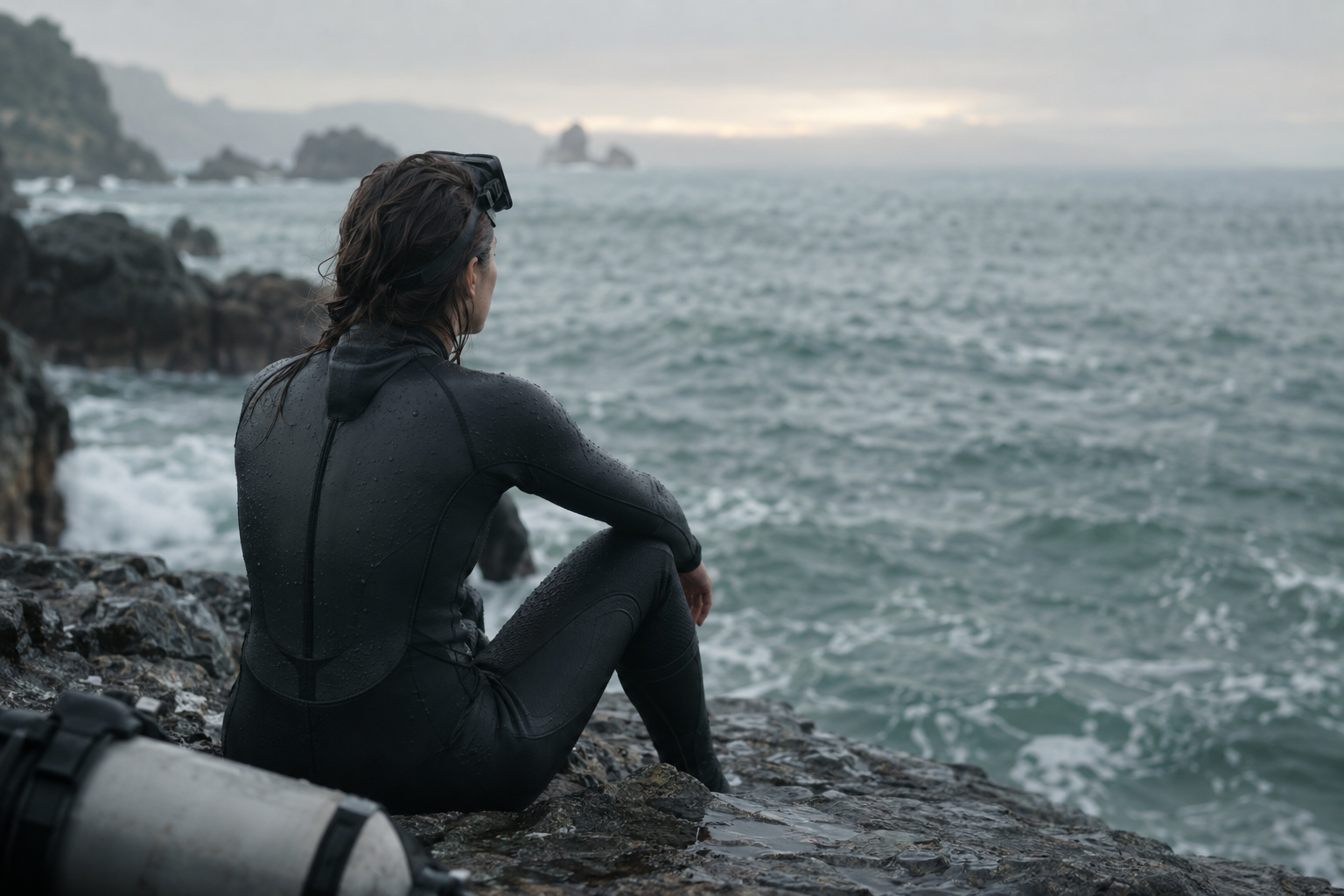
In 1975, Duncan Godden and Alan Baddeley published "Context-dependent memory in two natural environments: on land and underwater" in the British Journal of Psychology. The design was simple. Divers learned lists of unrelated words either on the shore or underwater, then tried to recall them either in the same environment or in the other one.
Words learned underwater came back better underwater. Words learned on land came back better on land. Switching environments between learning and testing cut recall substantially. The words stayed the same. The only thing that changed was where the divers were asked to find them.
That is the conference experience in a single finding, and it matters for anyone who meets people for a living. You stand in a hotel ballroom, take in the details of someone's work, then try to pull those details back at your desk a week later. The person hasn't changed. The room has. Free recall, the kind no badge or business card prompts you with, is the memory that depends most on the place where you first took it in.
Learned
Tested
Task
Direction of result
On land
On land
Free recall
Better recall (environments matched)
Underwater
Underwater
Free recall
Better recall (environments matched)
On land
Underwater
Free recall
Worse recall (environments switched)
Underwater
On land
Free recall
Worse recall (environments switched)
Either
Same or switched
Recognition (1980 follow-up)
Little to no environment effect
Design and direction of results, Godden & Baddeley (1975, 1980), British Journal of Psychology.
Recognizing someone is a different job from recalling what they said
Feeling certain you remember a contact is a recognition signal. It tells you nothing about whether you can recall what made the conversation worth a follow-up. The diver studies suggest the two follow different rules, and only recall depends heavily on being back in the original environment.
One conversation, walked through both sides of the gap
Take a single conversation at a mid-size trade show. Second afternoon, you're at a partner's booth when a regional ops lead drifts over. Ten minutes in, they mention their team is re-bidding a vendor contract in January because the current provider keeps missing delivery windows. They point at the demo screen behind you as they say it. Their colleague rolls their eyes on cue. You think: lead with reliability, mention January.
Every piece of that is a retrieval cue. The screen. The eye-roll. The din of the aisle. The slightly wired feeling of a conversation going well. The detail is bound to all of it.
Now run retrieval on Monday at your desk. The card hands you the name, the title, the logo. You get a flash of the booth and a warm, vague sense that it went well. "January" and "delivery windows", the two facts that would make your email land, stay buried, because nothing on your desk points to them.
Capture belongs on the floor, before the room changes
If the encoding gap is real, the variable that matters most is where you write things down. A note typed thirty seconds after the handshake, still standing in the aisle, is written from inside the encoding environment. The cues are live. The detail comes out whole because everything that indexes it is still around you.
A note written that night is a reconstruction. Often a decent one, but built only from what survived the move.
That changes what a useful capture looks like. It doesn't need to be complete. It needs the one or two hooks the room was holding and the card can't: "January re-bid, delivery misses" beats a paragraph of impressions written later. Short, specific, saved before you walk away.
Missed the window? There's a partial fallback. Before you write the follow-up, picture the booth: where you stood, who else was there, what was on the screen. Rebuilding the setting in your head puts some of those cues back in play. It won't bring everything back. It may bring back more than staring at the card.
Your desk on Monday is the worst place to remember what happened on the floor on Wednesday.
Where Met fits
Met was built around the moment this argument points at. Event Mode keeps capture a tap away while you're still on the floor, so the card and the hook that made the conversation matter get saved together, in the room where they were encoded. When you sit down later to follow up, you're working from what you knew in the moment instead of what survived the walk to the car.
Your contacts stay in your own iCloud, not on someone else's server. No ads, no nagging notifications while you're mid-conversation.
The gap itself is a feature of human memory, and no app erases it. What you control is which side of it your notes get written on.
Save the detail while you're still in the room. Get Met.
Context-dependent memory research going back to Godden and Baddeley's 1975 diver study points one way: details come back best in the environment where you learned them. Met is designed for that moment. Event Mode keeps capture a tap away on the exhibit floor, contacts stay in your own iCloud, and the app stays quiet while you're talking to someone.