Your best conference contact sat beside you on the flight home.
Badge scans and card swaps decide who gets logged. Shuttles, coffee lines and the flight home produce the best conversations and leave no record of them.
Row 23, a great conversation, and a name gone by baggage claim
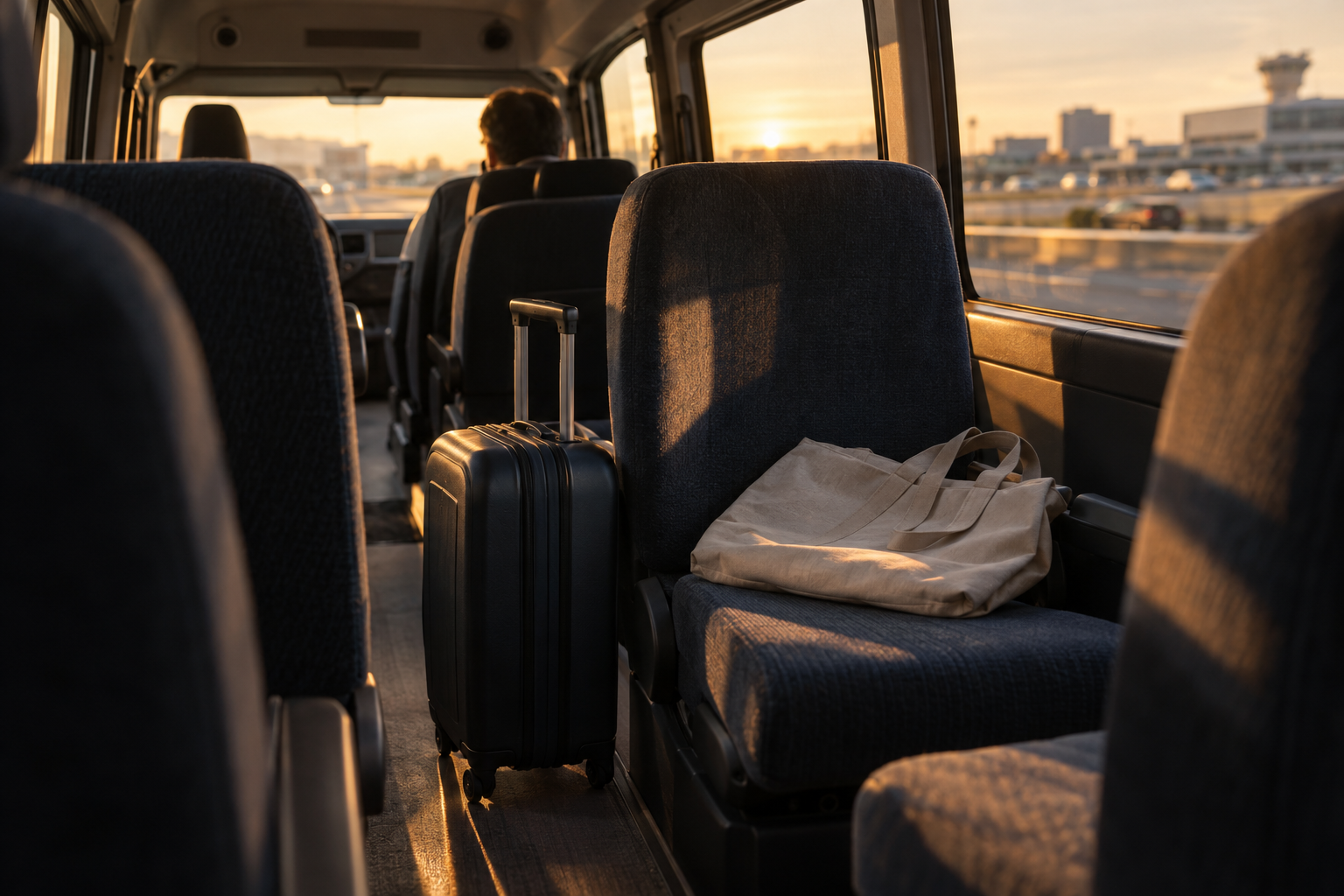
The best conversation of the conference happened on the flight home. Three days on the show floor, a stack of badge scans, a sponsored dinner with people who mostly wanted to sell you something. Then, somewhere over the middle of the country, the person in the window seat turns out to run operations for exactly the kind of company you've been trying to reach.
You talk for most of the flight. They mention a budget cycle that opens in the spring, a vendor they're quietly unhappy with, a colleague you really should meet.
No cards. Nobody digs one out on a plane. No badge either, because the lanyard went into the bag back at the hotel.
By baggage claim you've still got the company, roughly. The vendor complaint, clearly. The name is gone somewhere between the jet bridge and the carousel.
The ritual gap: capture follows ceremony
Every conference comes with built-in capture rituals. The booth scanner. The card swap at the end of a hallway chat. The attendee app that lets you tap someone's badge code. Each one produces an artifact, and the artifact is what prompts you to log the person.
The ritual gap is the distance between where capture happens and where good conversation happens. Capture is triggered by ceremony. Conversation quality has nothing to do with ceremony. So the two drift apart, and they drift in a predictable direction.
The booth visitor who scanned in for a tote bag gets logged automatically, with a timestamp and a job title. The person you talked shop with for twenty minutes in the hotel shuttle line gets logged only if you do it yourself, from memory, later.
Usually you don't.
Where it happens
Artifact created
What prompts capture
What you usually keep
Booth visit
Badge scan
Automatic, exhibitor-side
Name, title, company
Card swap after a session
Business card
The card in your pocket
Name and company; context only if you wrote it on the card
Attendee app connection
In-app contact
A tap
Name and title
Airport transfer or hotel shuttle
None
Nothing
The company, maybe
Breakfast or coffee line
None
Nothing
One thing they said
Hotel bar after the reception
None
Nothing
A first name, if you're lucky
Flight home
None
Nothing
Their role and the problem they described
The ritual gap, mapped across one conference trip. The capture columns follow ceremony. The right-hand column follows conversation.
Your contact list is a map of where the scanners stood.
Why 'skip the sessions, work the hallway' only gets you halfway
Conference veterans already know the good stuff happens outside the program. Conference regulars even have a name for it, the hallway track, and plenty of experienced attendees plan whole trips around it. That advice is correct. It's also incomplete.
Sending people toward unstructured spaces without changing how they capture pushes them into the conversations they're least equipped to keep. The hallway track has no scanner. The hotel bar has no badge reader. And bringing more cards doesn't help at 6:40 a.m. in the breakfast line, when you're holding a plate and a coffee.
The standard patch is "just write it down." That assumes the moment allows it, and at the edges it rarely does. In a boarding line, mid-sentence, pulling out a phone to type someone's details while they're still talking reads as rude. So people wait, and the waiting is where it goes.
Why do you remember what someone does but forget their name?
Memory research explains why the name goes first. In a 1987 study, McWeeny and colleagues found people were better at remembering that a face belonged to a baker than that it belonged to someone named Baker. Same word. An occupation hooks onto things you already know about the world, and a surname hooks onto almost nothing. Psychologists now call it the Baker-baker paradox, and it describes the baggage-claim problem exactly: you keep the role and the vendor complaint, and you lose the name.
Introductions make it worse. Malcolm Brenner's 1973 work on the next-in-line effect showed people recall poorly what was said just before their own turn to speak, because what comes right before your turn never gets properly encoded. Two strangers trading names in a shuttle are in exactly that spot.
The decay is also fast. Hermann Ebbinghaus's forgetting-curve experiments, published in 1885, showed new material is lost fastest soon after learning, before the curve levels off. The 72-Hour Memory Cliff covers what that slope does to follow-up after an event. At the edges of an event there's no card to slow it down.
The scanned leads have their own problem. A badge scan records a stop at your booth and nothing of the conversation. Ritual capture produces records of whoever stood nearest the scanner.
One trip, traced edge to edge
Walk a three-day trade show by where the conversations actually happen.
Day one, the ride in. You share a car-service line with someone heading to the same hotel. Ten minutes of shop talk about a platform migration you're both dreading. No artifact.
Day two, the show floor does what it's built to do. Scans pile up, including the tote-bag line. Cards come back in a jacket pocket. Before the keynote, someone in the coffee line overhears your company name and asks a sharp question about pricing. No artifact.
Day three, the hotel bar after the closing reception. The best-informed person you'll meet all week, an operator who has lived through the exact problem you sell into. You trade first names. No artifact.
Then the flight home, and the stranger in the window seat.
Monday morning, your log is full of the floor and empty at the edges. And the follow-up list you build from it is sorted by which conversations came with paperwork.
Capture the context first, the name second
If capture follows ritual, the fix is a ritual of your own, triggered by conversation quality.
Capture the moment someone worth remembering walks away, before the next thing starts. Getting off the shuttle. Leaving the coffee line. The seatbelt chime on landing. Sixty seconds, no more.
And reverse the order most people use. Write down where you were, what they do, and the one specific thing they said. Then the name, if you have it. A role, a company and a detail will usually lead you back to a person through a company site or a mutual contact. That order matches the Baker-baker research, too: the role is the part memory holds onto.
One more change for Monday: rank the follow-up list by conversation quality. The shuttle stranger with a spring budget cycle outranks the scans from the tote-bag line.
Capture order for an artifact-free conversation
1. Where you were (shuttle, breakfast line, flight home). 2. Role and company. 3. The one specific thing they said. 4. The name, if you have it. Context leads back to a name.
Where Met fits at the edges
Met is built on the idea that a contact is a person plus the reason you'd talk to them again. That matters more at the edges of an event than on the floor, because the edges never hand you a card to start from. What you have is a role, a company, a detail, and a short window before it fades.
Event Mode keeps capture quick on the floor, where cards and badges come one after another. At the edges, where there's nothing to scan, Add Manually takes the contact by typing, with where you met and what you talked about. The context you save is what the follow-up gets written from, so the note to the window-seat stranger can mention the spring budget cycle instead of opening with "great to meet you."
Contacts live in your own iCloud rather than on a vendor's server. No ads, no data sold.
Get Met and keep the conversations that happen on the way home.
Met treats every contact as a person plus the context of where you met and why it mattered. Follow-ups are drafted from what you saved.