AI Summit NY 2026: the ROI audit, the open-model exit, the token bill.
BCG's survey has AI's share of IT budgets up from 5% to 17%. At Javits in December, buyers start asking for receipts on open models, token bills and who owns the data.
Context: two days at Javits, in the year the AI budget line got big
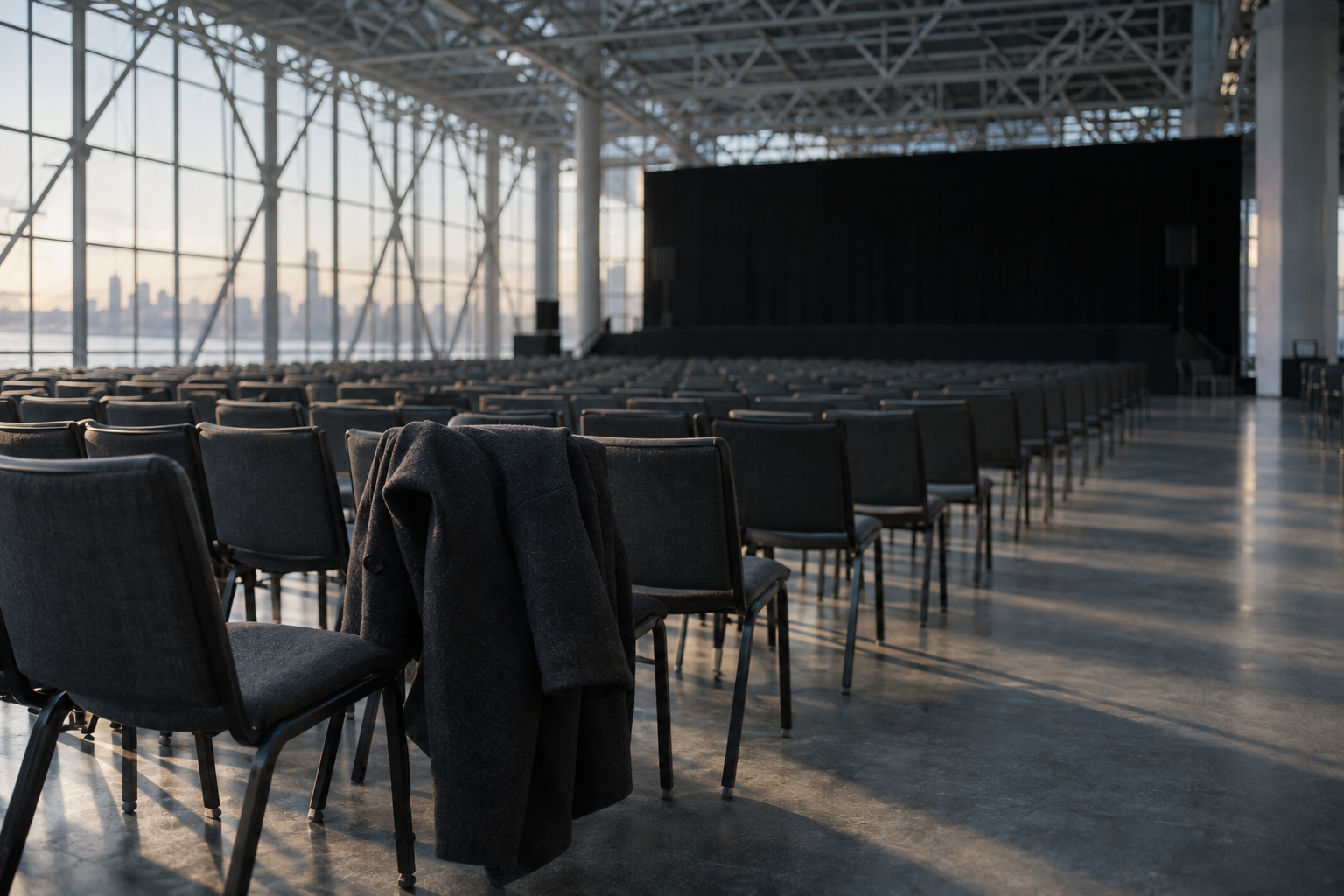
The AI Summit New York runs December 9-10 at the Javits Center. The organizer calls it the 11th edition and lists 350+ speakers and an expected 7,500+ attendees from 80+ countries. It also lands in a year when respondents to BCG's Applied AI 2026 survey reported that AI's slice of the IT budget had more than tripled. So this is the East Coast room where the people who signed those checks come to find out what they bought.
The year's headline: 17% of the IT budget, and the audit that comes with it
In BCG's Applied AI 2026 survey, respondents reported that AI's share of the IT budget has more than tripled, from 5% to 17%. The same report says what comes next: every scaled AI investment needs 'an explicit value thesis and evidence appropriate to its purpose.' McKinsey's State of AI in 2026 survey, meanwhile, has enterprise AI on the road to ROI. So BCG wants evidence, and McKinsey reports the returns are on the way. Buyers will show up with both claims in hand.
That's the mood walking into Javits. Plenty of the buyers on the floor approved early pilots, and their finance teams now want to know what came back.
Last year's program had a talk on exactly this question. At the 2025 summit, Hexaware's Mehdi Goodarzi gave a talk titled 'Who Owns Intelligence Wins: Escaping the AI "Rent Trap."' Futuriom's analysis of more than 200 case studies found that the organizations getting measurable returns build on open models customized with their own internal data, ahead of off-the-shelf frontier models. So the rent trap now shows up as a procurement question as well as a conference talk.
The organizer is betting bigger on live events. On Oct. 6, Informa announced it will acquire Clarion Events from Blackstone for $2.96 billion and separate its academic business, Taylor & Francis. Its Informa TechTarget business has also launched an MCP server that brings person-level intent data into AI workflows powered by Claude, ChatGPT and other assistants. The company that runs the room also sells buyer intent data to vendors.
This year, the vendor with a cost line beats the vendor with the best demo.
Speakers worth showing up for: four roles to watch
Four roles will decide how the ROI argument plays out. If you're there to buy, watch these.
The buyer-side CIO or CFO with a budget story. Look for an executive from a New York bank, insurer or health system on a main-stage slot. The signal is BCG's call for an explicit value thesis on every scaled investment. Ask: 'What share of your AI spend has a named business owner and a target number attached, and what happened to the projects that had neither?'
The frontier model provider's enterprise lead. The Futuriom finding above points buyers toward open models customized with their own data. That's a direct threat to this person's quota. Ask: 'If my data never leaves my environment, what are you selling me that an open model on my own infrastructure can't do?'
The open-model and infrastructure camp. Nomura's September tokenomics analysis found a single enterprise query can consume over 6,000 tokens in system prompts and retrieved documents before the user's question is even processed. Ask: 'What's your cost per resolved request, context overhead included, at the volume my contact center actually runs?'
The integrators with a workforce or exit story. Hexaware had last year's rent-trap talk. EY's 2026 slate includes 'The next transformation: leading people through AI, agents and accelerating change.' If Hexaware returns, ask: 'What did exiting a vendor cost a client, in months and dollars?' Ask EY: 'Which of the roles you redesigned for agents now show up in a different headcount plan?'
Breakouts with signal density: where the cost and data arguments get specific
Data Excellence track. It's named in the call for papers, and it's where the proprietary-data argument stops being a slogan. Pick sessions where a buyer walks through their own pipeline. Vendor architecture diagrams you can get at the booth.
AI Security Forum. It's listed on the summit's site alongside the conference tracks. Once data stays in-house, security owns the architecture review. Likely the best room for learning which deployments got blocked, and why.
Applied AI track, buyer-led only. It's another track in the call for papers, and the organizer promises industry-specific case studies and live demonstrations. One rule: if the vendor presents alone, skip it. If the customer is on stage with numbers, sit up front.
Any compute or infrastructure session. This is where the token bill lives. In Washington Technology, John Mark Suhy argued the Pentagon should manage AI tokens as a consumable, with an allocation structure in place before it buys more. Watch whether commercial buyers in the room are doing the same thing, department by department.
Next Generation track. Also named in the call for papers. Treat it as scouting and budget one session for it.
Companies to track at the booths: what they say, what they're selling
These come from the summit's published 2026 sponsor list, last year's program and the host's own moves.
Nscale. What they say: it's on the 2026 sponsor list, and it bills itself as 'the engine of superintelligence.' What they're selling: full-stack AI infrastructure, 'from ground to cloud.' For buyers moving open models onto infrastructure they control, the Futuriom shift is their pitch. Expect the conversation to land on cost per token and where the data physically sits.
Informa TechTarget. What they say: their new MCP server brings 'buyer intelligence' into AI workflows. What they're selling: person-level intent data, delivered inside sales teams' assistants. It's part of Informa, the organizer, and that's why it's worth tracking. If you're a vendor, it's a data feed on in-market buyers. If you're a buyer, assume your content consumption feeds products like it.
The systems integrators: EY, Hexaware and peers. What they say: transformation partner. What they're selling: the exit and the redesign. A rent-trap talk is a pitch for migration work, and workforce redesign is a consulting engagement with a long tail. EY is on the 2026 sponsor list, and its own summit page lists sessions including 'From lab to impact: why financial institutions have to prove that AI pays' alongside the workforce session above. Hexaware was on the 2025 program.
The frontier model vendors, as a category. What they say: capability. What they're selling: retention. Likely pitches include enterprise data-handling terms, private deployment options and pricing built to beat the open-model math. Ask every one of them for the cost line.
Conversation patterns: three hallway debates and the assumption that 17% is a floor
1. Rent or own. The Futuriom finding is the opening position. The hallway version is harder: do the savings survive the cost of running, securing and staffing the stack yourself? Expect integrators to say yes and frontier vendors to say no.
2. Who pays the token bill. Nomura's 6,000-token context number will come up in finance conversations whether or not anyone cites it. And Suhy's consumable argument has a commercial twin. Do tokens get allocated by department like cloud spend, or stay in one central budget until someone gets surprised?
3. Whether workforce change counts as ROI. EY's workforce session puts the people side on the agenda. The CFO's question is what that's worth. If the value case is 'people do higher-value work,' finance won't book it. Likely the most heated version of the ROI debate, because it's the one with jobs attached.
The assumption under all three: the budget keeps growing. Every booth pitch, every roadmap slide and most of the panels will treat BCG's 17% as a floor. Read the same BCG report again. It says every scaled AI investment needs an explicit value thesis, and that an investment which repeatedly fails that test should be rescoped or stopped. The obvious alternate outcome is that a chunk of that 17% gets cut back to the projects that can show one. That's an expensive thing to say from a sponsored stage, so you'll hear it at dinner instead.
Bet on consolidation. The buyers who leave Javits with fewer vendors and a cost line per use case are the ones who'll still have a budget next year.
After Javits: the 72-hour window
Two days. An expected 7,500+ attendees. You'll leave on Thursday with more names than you can place by Monday. The ones worth keeping are the buyer who told you their real token bill and the vendor who actually showed you a cost line, and they'll hear the same pitch from half the hall by next week. Send a specific follow-up inside 72 hours, while they still remember the conversation. Met is built for that window: scan the cards and badges you collect on the floor, then draft the follow-ups before the names go cold. Get Met on iPhone. There's a free tier.
Download for iPhone
Read by operators heading to The AI Summit New York who want the intel before they walk into Javits.